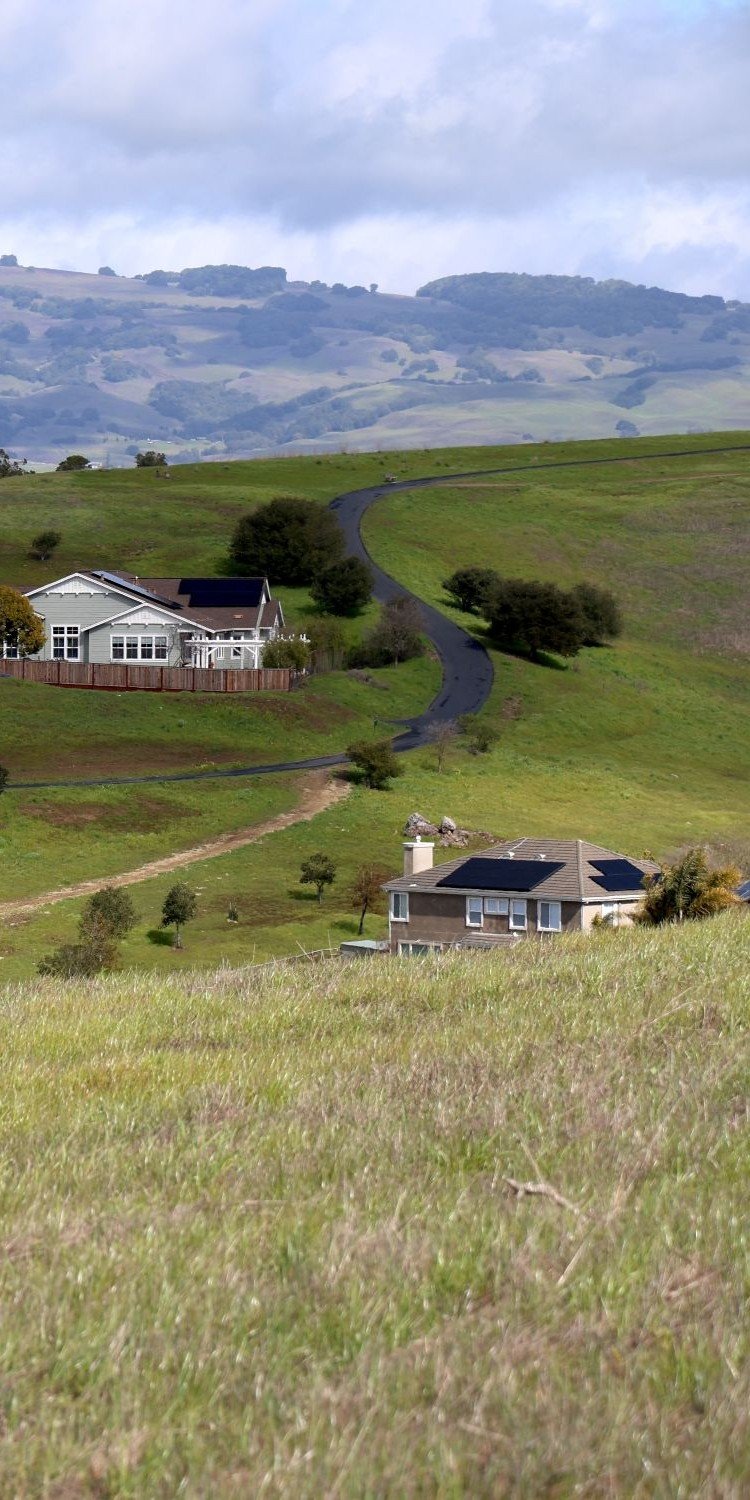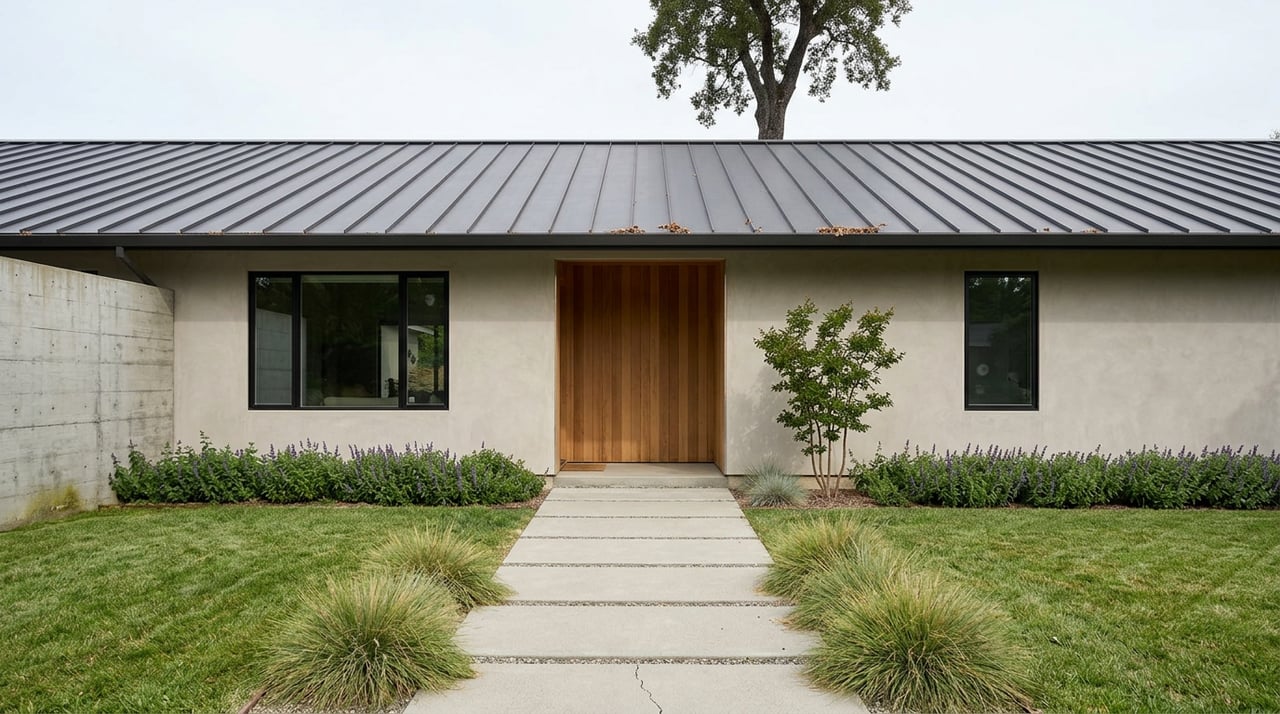
A two-bedroom condo above a shop on the west side of the Windsor Town Green priced in the high $500,000s this spring. A three-bedroom house backing onto one of the private lakes in Lakewood Hills, less than two miles away, closed north of $970,000 in the same season. Both are Windsor addresses. Both would show up under the same city name if you searched listings by town. And if you only looked at the single number most sites report as Windsor's median price, you would have no idea either of those homes existed.
That number, somewhere between $840,000 and $872,000 depending on which month and which data source you check in the first half of 2026, is real. It is also close to useless for deciding whether Windsor fits your budget, because Windsor is not one market. It is at least four, and they trade differently enough that a buyer who only knows the townwide median is shopping blind.
One Median, Four Markets
Windsor's housing stock splits cleanly along a few lines: which side of Highway 101 a home sits on, whether it is detached or attached, and how old the development is. Based on sale prices from the first half of 2026, the four segments look roughly like this:
| Windsor submarket | Typical sale price (H1 2026) | What you're actually buying |
|---|---|---|
| Downtown | around $585,000 | Older, walkable housing stock close to the historic core |
| Town Green Village | around $595,000 | New Urbanist condos with retail below and living space above |
| East Windsor | around $849,000 | Traditional subdivision homes on roughly 5,000 to 7,500 square foot lots |
| West Windsor | around $972,500 | Larger parcels, including the gated Lakewood Hills community |
That is a spread of nearly $400,000 inside one zip code. A buyer comparing "Windsor" to "Healdsburg" using townwide figures misses how much variation there is within Windsor, just as a townwide comparison hides variation on the other end. One 2026 market comparison put Windsor's overall pricing at roughly 40 percent below Healdsburg equivalents. That gap is real, but it only tells you something useful once you know which slice of Windsor you're pricing against which slice of Healdsburg.
Why the Split Runs Along the Highway, Not the Calendar
The price gap between East and West Windsor, or between the Town Green core and the subdivisions further out, is not a temporary market quirk. It is structural, and it has been for decades.
Town Green Village was built as a mixed-use, New Urbanist project, three-story buildings with commercial space on the ground floor and condominiums above, designed to put homes within walking distance of shops, the library, and the Green itself. Downtown Windsor's older stock is smaller and closer together by design. Both segments trade lower because they are mostly attached housing on compact footprints, not because the location is less desirable.
West Windsor is a different proposition entirely. Lakewood Hills, developed in the 1980s, is a gated community built around two private lakes, with 220 total units, a pool, tennis courts, and a monthly HOA fee of $319 that covers the common areas and the gate but not exterior maintenance on individual homes. The development offers space and privacy without leaving Windsor. That kind of low-density, amenity-heavy development simply costs more to buy into, and it always has.
East Windsor sits in between: standard suburban layouts, more traditional lot sizes, less exclusivity than the west side but more room than downtown. None of these four segments is really competing with the others for the same buyer. Lakewood Hills and a condo above a restaurant on McClelland Drive may not be direct comparisons.
The Grocery Store That Changed the Math
If you want a marker for when downtown Windsor stopped being a pass-through on the way to Healdsburg and started being a destination on its own, it is worth looking at Oliver's Market, which opened its Windsor location in Bell Village in May 2016, west of Highway 101 and steps from the Town Green. Before that, a full-service grocery trip from much of Windsor meant driving to Santa Rosa. After, the walkable core had a genuine anchor tenant, not just tasting rooms and boutiques.
That matters for the pricing conversation because it shows the discount on downtown and Town Green Village housing was never about the neighborhood lacking amenities. It has restaurants, a grocery store, a library, and the Green itself within walking distance. The lower price reflects unit type and lot size, condos and townhomes instead of detached houses on quarter-acre lots, not a judgment on the location. That distinction matters if you are choosing between a smaller, walkable home downtown and a larger detached home further out. You are not trading down in desirability. You are trading square footage and lot size for walkability, and the math on that trade is currently in the walkable core's favor.
The Cheapest Side of Windsor Has the Biggest Construction Pipeline
Here is the part that should change how you think about that current discount. The same downtown corridor that trades cheapest today is also where nearly every active development proposal in Windsor is aimed.
SMART's own commuter rail already runs through Windsor. Regular passenger service began in 2025, and the agency is now building a $269 million, nine-mile extension north to Healdsburg. Fieldwork on that extension, including utility potholing near Grove Street and along the rail corridor, began April 27, 2026, according to SMART's construction updates, with passenger service to Healdsburg targeted for late 2028.
At the same time, two separate developers are competing for the right to build on adjacent downtown parcels:
- 330 Land Company, an Irvine-based firm working with Gallaher Companies, filed an application in late December 2025 for The Village on the Town Green, an 18.24-acre project at 9290 Old Redwood Highway, just north of the Bell Village Shopping Center. As proposed, it would bring 98 single-family homes, 48 junior accessory dwelling units, 97 deed-restricted affordable apartments, and a 113-unit senior living facility to a site that has sat vacant through three failed development attempts since 2016.
- City Ventures put forward a competing proposal in December 2025 for New Mill Creek, 260 townhomes on a 20-acre site south of Windsor River Road, east of the SMART tracks. That site was originally entitled in 2019 for a 360-unit condo project by developer Bob Bisno, which stalled in 2021 amid financing trouble and has sat dormant since.
Neither project has broken ground. Both are still working through Windsor's planning process as of the reporting available in early 2026, and it is not unusual for downtown Windsor proposals to take years or die entirely, as the site's history shows. But the direction is clear: hundreds of new units, spanning affordable, market-rate, and senior housing, are aimed at the exact corridor that currently anchors Windsor's lowest price point.
That is the mechanism worth understanding before you assume today's downtown discount is permanent. New supply concentrated in one submarket can do one of two things to price. It can keep prices lower longer by adding inventory faster than demand grows, or it can reset the segment upward if new construction is priced at current building costs, well above the older stock it sits next to. Which way it breaks depends on how many of these projects actually get built and how they're priced when they do. Either way, the part of Windsor that looks like the value play today is not a fixed point. It is the part of town with the most uncertainty baked in.
What This Means If You're Comparing Windsor to Somewhere Else
If you're weighing Windsor against Healdsburg or another Sonoma County town, the townwide median is a starting point, not an answer. The real question is which Windsor you're comparing.
If walkability and a lower entry price matter most, the downtown and Town Green Village stock delivers that today, but you're buying into a corridor where the supply picture could look different in three to five years depending on which development, if either, gets built. If space, privacy, and an established gated community matter more, West Windsor and Lakewood Hills already price that scarcity in, and that price is unlikely to move based on downtown construction news.
Either way, the smart move is to look at the submarket, not the town average, before you decide whether Windsor fits your number.
A Few Common Questions
Is Windsor actually cheaper than Healdsburg? On average, yes. Based on early 2026 reporting, Windsor's overall pricing runs roughly 40 percent below Healdsburg equivalents, and Windsor's per-square-foot cost has also come in below the countywide figure. But that comparison flattens Windsor's own internal spread just as much as it flattens Healdsburg's.
Will the SMART extension to Healdsburg affect Windsor home prices? Windsor already has its own SMART station, in service since 2025, so the extension itself is mainly a Healdsburg story. What matters more for Windsor pricing is the development activity clustering near that same rail corridor downtown, which is a separate but related story.
Are the Village on the Town Green and New Mill Creek projects approved? No. Both were still in the application and review stage as of the most recent reporting in early 2026. Downtown Windsor has a long history of proposed projects on these particular parcels stalling or falling through, so neither should be treated as a certainty.
If you're trying to figure out which side of Windsor actually matches your budget and your plans, or how a town like this compares to Healdsburg or Santa Rosa once you look past the headline number, Michael Pellegrini can walk through the current inventory with you and help you sort the real tradeoffs from the ones that just look real on a listing page.
This article is general information, not legal, tax or financial advice. Consult a qualified professional about your situation.