The listing has a hot tub on the back deck and a line in the description about rental income. The agent mentions, almost in passing, that the home is "currently operating as a successful vacation rental." The photos back it up: fresh linens, a welcome basket, a laminated card with the WiFi password.
None of that transfers to you.
In Sonoma County, a vacation rental permit belongs to the person who holds it, not the parcel it sits on. When the property sells, the permit expires with the sale in almost every case, and the buyer starts from zero under whatever rules are in effect on closing day, not the rules that were in effect when the seller applied. Around Healdsburg, those rules have changed twice in the last four years, and they now apply very differently depending on which side of an invisible line the property sits.
Why the City Limits Are the First Wall
Start with the simplest fact. Inside Healdsburg city limits, whole-home vacation rentals are not permitted in any residential zoning district. The only place the city allows them is its Commercial District, and only with a Conditional Use Permit, capped at a 29-day maximum stay. If a property is zoned residential and sits inside the city, there is no path to a non-hosted short-term rental there, full stop, regardless of what a previous owner may have run informally.
There is a narrower path called a hosted rental, where the owner lives on site and rents a room or guest suite rather than the whole house. That still requires its own zoning permit, and it does not turn a residential property into an income-generating whole-house rental the way an unhosted listing would. Anyone budgeting rental income against a Healdsburg address should also know the city's transient occupancy tax runs at 14 percent, a rate that applies regardless of zoning path, once you're legally operating.
Read the city's own vacation rentals page before assuming a residential-zoned home in town has any legal route to short-term income.
Where the Spillover Went
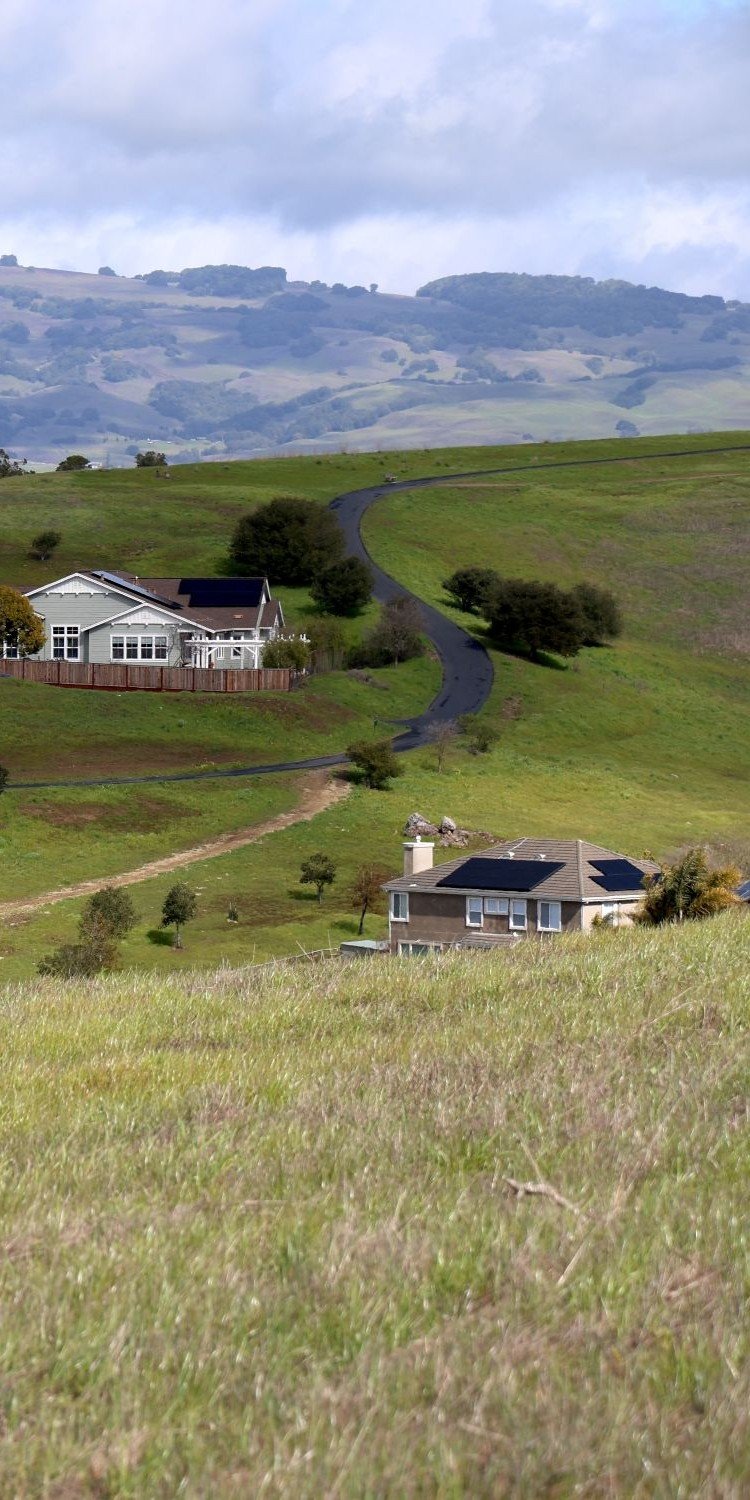
Because the city closed that door, demand didn't disappear. It moved to the unincorporated land just outside the city line, where Sonoma County, not the city, writes the rules. The areas that absorbed that demand have names: southwest of Highway 101, the Chiquita Road corridor north of 101, and stretches of Alexander Valley Road and Mill Creek Road. These pockets carry agricultural or rural residential zoning that historically allowed vacation rentals, and buyers who wanted STR income near Healdsburg but couldn't get it inside the city started concentrating there instead.
That concentration is exactly what triggered the next round of restrictions.
The County Drew New Lines in 2023
Sonoma County rewrote its vacation rental rules in stages. Ordinance 6386, adopted in August 2022, relocated the rules into a new section of county code. Ordinance 6423, adopted in April 2023, applied cap and exclusion zones to specific parcels in the county's 1st, 4th, and 5th supervisorial districts. Ordinance 6427, adopted a month later, added the business license requirement that now sits on top of the zoning permit. The county's own vacation rental regulations page lists all three by number.
The county's own announcement of the new caps named Fitch Mountain, just outside Healdsburg, as one of the first neighborhoods to get a hard limit, alongside Hughes Chicken Colony near Sonoma and Austin Creek near Guernewood. That detail alone tells you this wasn't a countywide blanket rule. It was aimed at specific places where concentration had already become a problem, and Healdsburg's surrounding land was one of them.
The zones that formed around Healdsburg specifically include:
- Fitch Mountain, bordered by the city on one side and the Russian River on the others, now under a density cap
- The area west of Highway 101 near the city, where vacation rental concentration is already running at roughly 17.5 percent against a 5 percent cap, meaning it is not accepting new permits until existing ones lapse
- The area between the Russian River and the city's eastern boundary, now capped at 5 percent, a change from a prior total exclusion
- The area north of Dry Creek Road near the city, also brought under the new cap structure
One estimate puts the share of previously STR-eligible parcels in the unincorporated county that lost that eligibility under the 2023 rules at roughly 91 percent. Whatever the exact figure, the direction is clear: the inventory that used to make a Healdsburg-area vacation rental purchase straightforward has shrunk by an order of magnitude, and it shrank in specific, mapped places rather than everywhere at once.
City Limits vs. the County Next Door
| Inside Healdsburg city limits | Unincorporated pockets nearby | |
|---|---|---|
| Whole-home STR in residential zoning | Not permitted | Permitted only outside cap/exclusion zones |
| Where it is allowed | Commercial District, with a CUP | AR, RR, LEA, DA, RRD zoning, if not capped out |
| Max stay | 29 days | 30 days or fewer |
| Transient occupancy tax | 14 percent | 12 percent |
| Permit transfers at sale | No | Generally no |
The Permit Belongs to the Seller, Not the House
This is the part that catches buyers off guard. A property currently operating as a legal vacation rental, with real booking history and real income to show a lender, will in nearly every residential case lose that status the moment the sale closes. The new owner has to apply fresh, under whatever zoning and cap rules are in effect that day, not the rules the seller operated under.
That matters because the rules have gotten stricter since many existing permits were issued. A property that qualified in 2019 might sit today in a zone that has since been capped or excluded entirely. The seller's current income doesn't tell you what you'll be able to do with the property. Only today's zoning map and today's cap status do.
Two More Checks Before You Write the Offer
Two mechanical details decide whether a permit is even available, independent of zoning.
The first is septic capacity. A vacation rental permit is capped to the number of bedrooms the property's septic system is rated for, not the number of bedrooms in the listing. A four-bedroom house with a septic permit on file for three bedrooms will only ever get a three-bedroom vacation rental permit. If there's no septic permit on file at all, the county requires a Finding Report, which means hiring a septic inspector to verify and map the system, a process that can run a couple thousand dollars and take up to six months to clear.
The second is the Williamson Act. Properties enrolled in this state agricultural preserve program, common on larger parcels around Healdsburg with vineyard or open-space contracts, are not eligible for any vacation or hosted rental use, period. It doesn't matter what the zoning otherwise allows. An ADU on an eligible parcel carries its own restriction too: in unincorporated Wine Country, ADUs generally need a deed restriction prohibiting short-term rental use before they're built, which rules out converting one into rental income later. And if the property sits inside an HOA, assume the CC&Rs prohibit short-term rentals unless you've confirmed otherwise in writing.
Before you write an offer on anything you're hoping to rent short term:
- Confirm whether the parcel is inside Healdsburg city limits or in the unincorporated county, since the rulebook changes completely at that line
- Look up the parcel against the county's cap and exclusion zone map, using the address or APN, before assuming any zoning designation is enough on its own
- Ask directly whether the current owner's permit, if one exists, will transfer, and get that answer from the county or city planning department rather than the listing agent
- Pull the septic permit on file and check the rated bedroom count against what the listing advertises
- Rule out a Williamson Act contract and check for an HOA, since either one can end the conversation regardless of zoning
A Few Common Questions
Can I still get a permit if the parcel is in a cap zone that hasn't hit its limit yet? Sometimes, if the current concentration sits below the cap. The area west of Highway 101 is already over its 5 percent limit, but not every capped zone near Healdsburg is full. Check the current percentage against the cap before assuming either way.
Does a hosted rental face the same restrictions as a whole-house rental? No. Hosted rentals, where the owner is present, follow a separate and generally less restrictive path both inside the city and in the county, though they still require their own zoning permit and won't produce the same income as an unhosted whole-house listing.
What if the seller says the permit is grandfathered? Ask for the permit number and confirm its status directly with Permit Sonoma or the City of Healdsburg planning department. A permit's history under the seller's ownership doesn't establish what happens to it after a sale.
If you're looking at a property near Healdsburg with short-term rental income in mind, the smartest move is to check the parcel's zoning and cap status before you fall for the listing photos. Michael Pellegrini can walk through a specific address with you and lay out exactly what a permit application would look like there, no pressure, just a clear read on what the property can actually do.