On October 8, 2017, the Tubbs Fire tore through two Santa Rosa neighborhoods in the same few hours. Coffey Park lost roughly 1,400 homes. Fountaingrove lost more than 1,500, the most of any single neighborhood in the city. Both were leveled almost completely. Both rebuilt under the same 2019 California building code. Both now market themselves, correctly, as having some of the newest housing stock in Santa Rosa.
If you're comparing new construction across the city right now, that similarity is exactly what makes this comparison worth slowing down for. Two neighborhoods started from the identical starting line and ended up in different insurance categories. If you're shopping "newer construction" as a proxy for "easier to own," Fountaingrove and Coffey Park are the clearest proof in Santa Rosa that the proxy doesn't hold.
One Fire, Two Blueprints
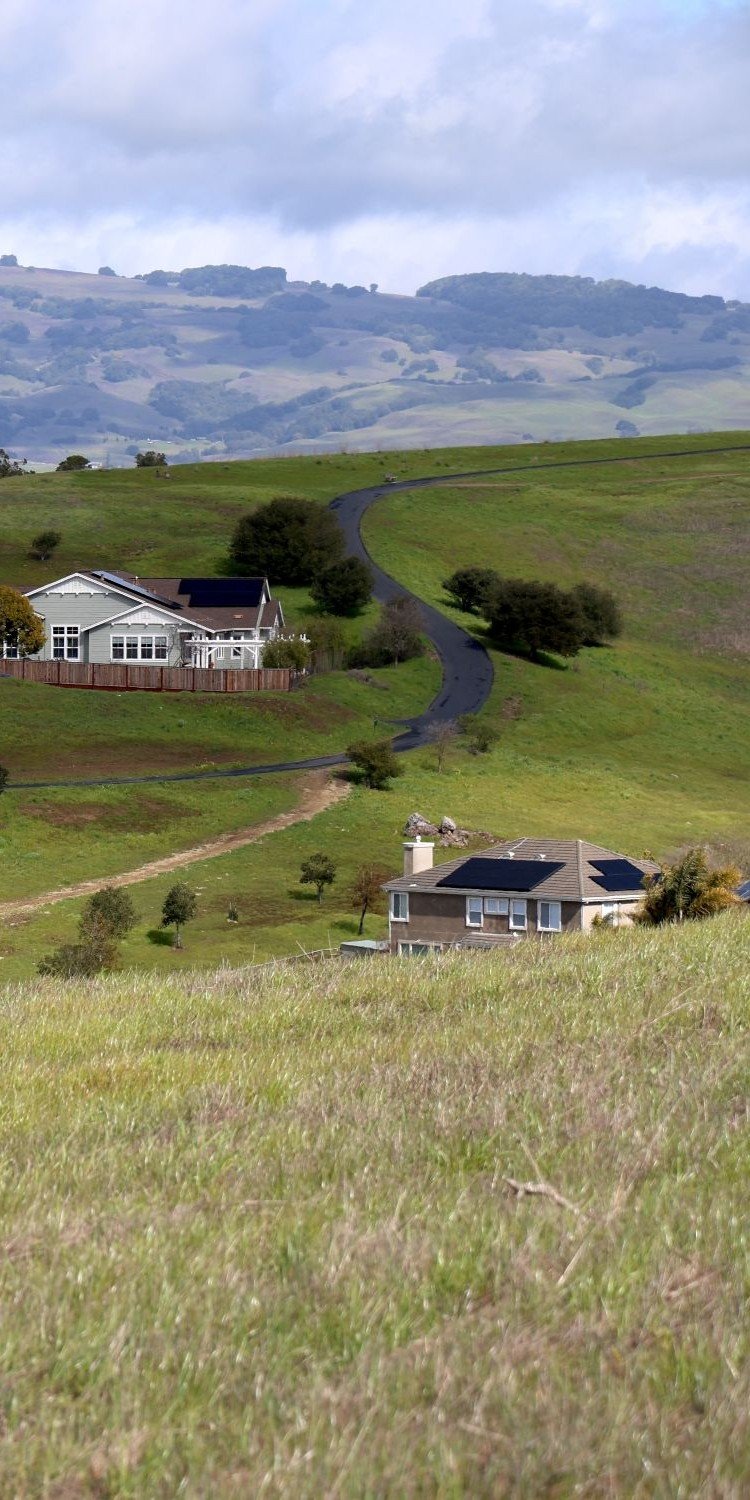
The split started with topography, not money or intent. Coffey Park's lots sat flat, sized nearly identically, with sewer connections already run to every parcel. A burned lot there was, for pricing purposes, interchangeable with the one next door. Fountaingrove's lots climbed the Mayacamas foothills in a range from a fifth of an acre to well over an acre, some with golf course frontage, some accessible only by narrow private roads.
That difference showed up in the numbers within months. Coffey Park's burned lots sold for roughly $140,000 to the low $200,000s. Fountaingrove's burned-lot listings had a median price of $350,000 and ranged as high as $800,000, according to Press Democrat reporting from early 2018. Agents working the area at the time said there was no reliable comp set yet for Fountaingrove because every lot's slope, access, and view were different enough to make each sale its own negotiation.
By January 2020, a little over two years out, Coffey Park was closing in on full recovery, with only about four dozen vacant lots left. Fountaingrove had crossed the halfway mark on completed construction, but city records showed 501 parcels with no rebuilding activity at all, more than double the number of finished homes at that point. Higher construction costs on hillside lots and the sheer variability of terrain kept slowing things down in ways that a flat subdivision never had to deal with.
Nine Years Later, on the Ground
Coffey Park's recovery is close enough to finished that the city is now working on the connective tissue around it. In February 2026, the Santa Rosa City Council awarded a $4.7 million contract to Argonaut Contractors of Santa Rosa for the Hopper Avenue Corridor Improvements Project, upgrading the road that links Coffey Park to Highway 101 and that was damaged during the original fire and the debris removal that followed. Construction started this spring. City officials described it as one of the final pieces of a recovery effort that has run for nearly a decade.
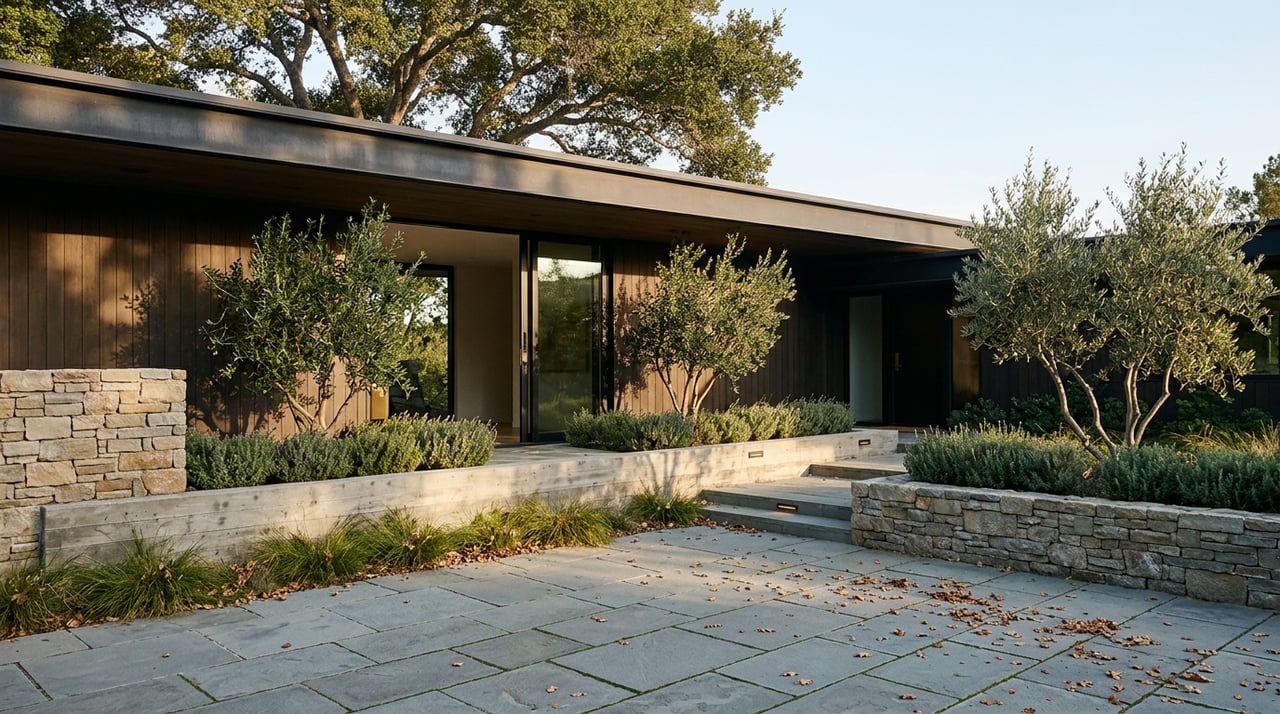
Fountaingrove's rebuild is still visibly in motion rather than winding down. Along Round Barn Boulevard, City Ventures has been filling in modern craftsman and California farmhouse-style homes in the new Grove Village development on previously burned acreage. Down the hill, W.L. Butler's Villa Rotonda project, 239 studio, one-bedroom, and two-bedroom apartments spread across 9.6 acres that were themselves part of the Tubbs Fire footprint, has three buildings already leasing with the final three expected to finish in early 2026. Fountaingrove isn't struggling. It's just still under construction in a way Coffey Park mostly isn't anymore.
What Your Money Actually Buys Now
Santa Rosa's citywide median sale price sat at roughly $729,000 to $750,000 as of mid-2026, depending on which tracker you check, with the typical home value hovering closer to $710,000 as of the end of August. That single number is close to useless if you're deciding between these two neighborhoods, because it's an average of two markets that no longer resemble each other.
Home value trackers checked this year place Fountaingrove's neighborhood median anywhere from roughly $1.24 million to over $1.7 million, depending on the aggregator and the time window. A few miles away, on the flatter side of the city where Coffey Park sits, comparable-size homes have been pricing in the $500,000s to $600,000s over that same stretch. That's not a normal size-and-finish gradient. It's two different markets that happen to share a zip code and a rebuild story.
The gap makes intuitive sense once you know the view, the acreage, and the exclusivity that came with Fountaingrove's rebuild. What doesn't make intuitive sense, and what actually matters for a buyer's monthly costs, is the next part.
The Insurance Mechanism the Listing Won't Mention
Here's the piece that changes how these two neighborhoods should actually be shopped: newer construction does not automatically mean easier or cheaper insurance in California. Insurability is driven by where the parcel sits on the state's fire hazard maps, not by the age of the roof.
California's FAIR Plan, the state's insurer of last resort for properties that private carriers won't cover, grew from roughly 126,000 policies in 2018 to more than 400,000 by 2025 and to somewhere near 680,000 to 696,000 policies by mid-2026. That growth traces almost exactly to the years since the Tubbs Fire and the string of major wildfires that followed elsewhere in the state. The California Department of Insurance approved a 29.1 percent average rate increase for FAIR Plan dwelling policies this year, down from the 35.8 percent the plan originally requested, and it takes effect for new and renewal policies on October 15, 2026, a date that is now just a few weeks away. The increase is weighted toward the wildfire portion of the premium, so properties in the highest-risk zones see the steepest jumps while lower-risk properties may see little change or even a decrease.
That last point is the one worth sitting with. A brand-new Fountaingrove home built to current fire codes can still fall inside a mapped Very High Fire Hazard Severity Zone simply because of where the hillside sits, and that mapping, not the construction date, is what determines whether a standard carrier will write the policy or whether the owner ends up layering a FAIR Plan dwelling policy with a separate Difference in Conditions policy to cover everything the FAIR Plan doesn't. Wildland-Urban Interface building standards for roofing, siding, vents, and glazing apply to mapped fire hazard zones regardless of how recently the home was finished. A Coffey Park rebuild sitting on flat ground away from that zone typically insures through the standard market without any of this. Two houses finished the same year, on the same fire footprint, can land in completely different insurance categories because of the ground under them.
Before You Write an Offer on "New Construction"
If you're cross-shopping newer inventory anywhere in Santa Rosa's fire-rebuild neighborhoods, a few questions matter more than the finish level on the kitchen:
- Ask the seller or listing agent for the current insurance carrier and the actual premium, not just confirmation that the home "is insurable."
- Check whether the parcel sits inside a mapped Very High Fire Hazard Severity Zone before assuming a 2020s build date solves the insurance question.
- If the home is on the FAIR Plan, ask whether a Difference in Conditions policy is already in place, since the FAIR Plan alone leaves gaps in liability and theft coverage that most buyers assume are automatically covered.
- Get a real quote before you remove your inspection or loan contingency, not after. An escrow-stage insurance surprise is a far worse position to negotiate from than a pre-offer one.
A Few Questions Worth Asking Directly
Does every home in Fountaingrove need FAIR Plan coverage? No. Coverage depends on the specific parcel's location relative to the mapped fire hazard zones, its defensible space, and the carrier's own underwriting appetite that year. Some Fountaingrove properties still qualify for standard-market policies. The point is that "newly built" isn't the qualifying factor.
Is Coffey Park immune to rising insurance costs? No home in a wildfire-exposed state is fully insulated from rate pressure, but flatland Coffey Park properties are far less likely to be forced onto the FAIR Plan in the first place, which is the main reason its owners are less exposed to this specific October rate change.
When exactly does the FAIR Plan increase apply to an existing policy? It applies at your next renewal date on or after October 15, 2026, not retroactively and not all at once across every policyholder. If your renewal falls in November, you'll see it in November. If it falls next spring, that's when it hits.
Both of these neighborhoods prove the same point from opposite directions: the story a home's age tells you and the story its insurance bill tells you are not the same story. If you're comparing new construction anywhere in Santa Rosa's post-fire neighborhoods, or anywhere else in Sonoma County, that's worth walking through before you're deep into escrow. Michael Pellegrini can help you pull the actual numbers, ask the right questions of the listing agent, and build a plan that accounts for what a property will really cost to hold, not just what it costs to close on.